Category: Guides

  • $18 Billion in Eleven Deals: What Boston’s Biotech M&A Wave Tells Every Founder About Exits

    $18 Billion in Eleven Deals: What Boston’s Biotech M&A Wave Tells Every Founder About Exits

    The first half of 2026 was the most active deal window Boston’s biotech cluster has seen in years. According to MassBio’s annual Industry Snapshot, 11 Massachusetts companies were acquired for a reported $18 billion combined, and eight went public, matching 2024 and 2025 put together.

    Look underneath, though, and the market is selective. Venture dollars rose 25% to about $3.45 billion, yet the average seed round shrank to about $4.65 million while the average Series A grew to nearly $80 million. Capital is concentrating in companies that have already de-risked their science.

    Three lessons for founders in any industry

    1. Buyers pay for evidence, not potential. The deals going through are for companies with data in hand. In services or software, the equivalent is clean revenue, retention and margins you can document.
    2. Large strategics are the exit. Growth is concentrated in big players, such as Lilly, which nearly tripled its Massachusetts headcount. Know the three to five companies most likely to buy you and what problem you solve for them.
    3. Readiness is a process, not an event. Clean books, documented IP, contracts that can be assigned and a credible management bench take 12 to 24 months to build. Companies that start early sell on their timeline.

    The other side of the ledger

    Deal activity hasn’t translated into jobs. Massachusetts biopharma employment fell about 3,600 in 2025, the first decline in more than two decades of tracking, and nearly a third of the region’s lab space sat empty. Consolidation creates winners, but integration usually means cuts.

    The Kingswell view

    Whether you are preparing for a sale, a merger or a strategic partnership, the playbook is the same as in biotech: reduce the buyer’s risk before you ask for their money. Our strategy guides cover how to evaluate a partnership, document your assumptions and build an operating rhythm a buyer can trust.

    Sources: Boston.com (MassBio Industry Snapshot). Written by the Ecosystem Intelligence Desk.

  • King Charles III: A Profile in Stewardship

    Hands tending a young plant in rich soil — a symbol of stewardship and long-term care
    Back to Guides & Editorial
    EditorialPerspectives6 min read

    King Charles III: A Profile in Stewardship

    Our name nods to a crown; his is real. A factual look at the life and reign of the United Kingdom's monarch — independently written, with no affiliation to or endorsement by the Royal Household.

    Kingswell borrows its name from an old idea of stewardship — building something durable enough to outlast its builder. It is a fitting week, then, to look past the metaphor to an actual monarchy still practicing that same discipline in public. This piece is independent editorial commentary. Kingswell Strategic Ventures has no affiliation with, and is not endorsed by, the British Royal Household.

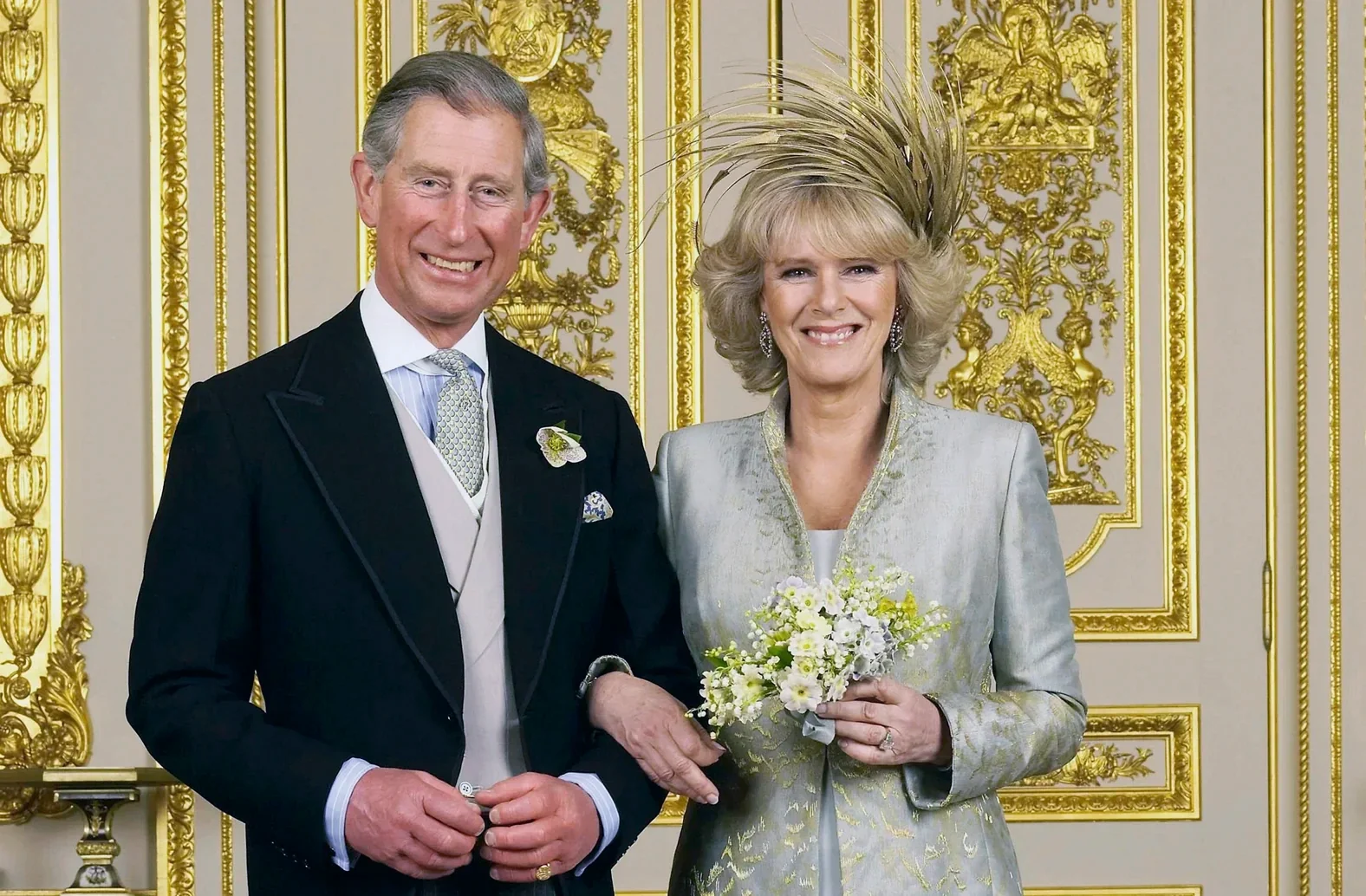
    Charles Philip Arthur George was born on November 14, 1948, at Buckingham Palace, the first child of then-Princess Elizabeth and Prince Philip, Duke of Edinburgh. He became heir apparent at age three when his mother acceded to the throne in 1952, and held the title Prince of Wales from 1958 until 2022 — longer than anyone before him in British history. He was educated at Cheam School, Gordonstoun in Scotland, a term at Geelong Grammar's Timbertop campus in Australia, and Trinity College, Cambridge, where he earned a degree in history.

    The waiting years were not idle ones. In 1976 he founded The Prince's Trust to help young people build careers, and over the following decades became patron to more than 800 charities. He was an early and consistent voice on environmental sustainability and organic farming, often well ahead of mainstream opinion, and in 2020 he launched the Sustainable Markets Initiative to push private industry toward measurable climate commitments.

    He acceded to the throne on September 8, 2022, following the death of Queen Elizabeth II, and was crowned King Charles III at Westminster Abbey on May 6, 2023. As monarch he has continued the advocacy of his prior decades from a more constrained constitutional position, while taking on the ceremonial and diplomatic duties of the office — including becoming the first British monarch to address both the French Senate and the German Bundestag.

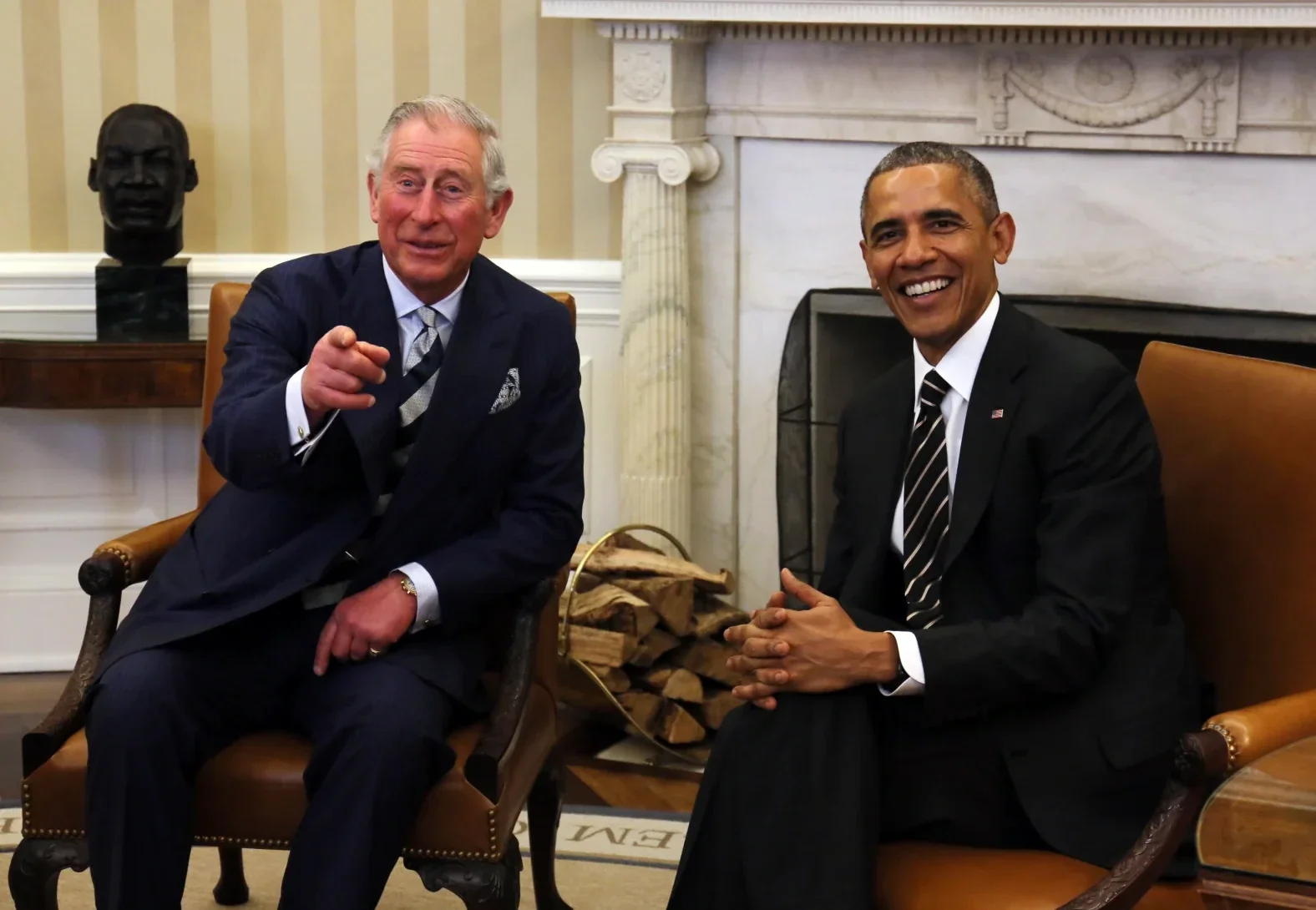
    The throne has not paused the rest of his life. In February 2024, Buckingham Palace disclosed that the King had been diagnosed with a form of cancer, unrelated to his prostate; he paused public-facing duties briefly for treatment and resumed them in April 2024, with a further short hospitalization in March 2025 for treatment side effects. He has continued a full diplomatic schedule since, including state visits to Australia, Samoa, France, Kenya, Canada, the United States, and Italy.

    None of this is a business case study — Kingswell is not in the business of monarchy, and this is not an endorsement, sponsorship, or claim of any relationship with the Crown. But the throughline is one we recognize: a long institutional memory, an insistence on causes decades before they were fashionable, and a public willingness to keep working through personal setbacks. Stewardship, whether of a company or a country, tends to look like that.

    Work with Kingswell

    Ready to bring clarity to your next decision?

    We work with founders and operators on the strategic and operational questions that matter most. Start with a conversation.

    Request a scope conversation
  • Reading the Signals in Early Customer Data

    Dashboard with charts and metrics on a laptop screen in a focused work environment
    Back to Guides & Editorial
    GuidesDiscovery5 min read

    Reading the Signals in Early Customer Data

    Early customer data is noisy and small. Knowing which signals to trust and which to discount is a skill that separates founders who learn from ones who confirm.

    Early customer data is one of the most valuable and most misused resources in venture building. It is valuable because it is real — it reflects actual behavior, not hypothetical preferences. It is misused because it is small and noisy, which means it is easy to find patterns that confirm what you already believe and easy to miss patterns that should change your mind.

    The first discipline is to separate behavioral data from attitudinal data. What customers do is more reliable than what they say. A customer who tells you they love the product but never uses it is giving you attitudinal data. A customer who uses the product every day without telling you anything is giving you behavioral data. Trust the behavior.

    The second discipline is to look for patterns in the outliers, not just the averages. Your most engaged customers are telling you something important about what the product is capable of. Your most churned customers are telling you something important about where it falls short. Both are more informative than the median.

    Small sample sizes require humility. With ten customers, you cannot draw statistically significant conclusions about anything. What you can do is generate hypotheses — specific, testable beliefs about why customers behave the way they do — and then design experiments to test them with larger samples.

    The most dangerous pattern in early customer data is the one that confirms your original hypothesis perfectly. Real data is messy. If your data is too clean, you are probably not looking at it honestly.

    The goal of early customer data analysis is not to prove that your thesis is right. It is to learn as much as possible about what is actually happening, so you can make better decisions about what to do next. That requires a genuine willingness to be surprised.

    Related reading

    Work with Kingswell

    Ready to bring clarity to your next decision?

    We work with founders and operators on the strategic and operational questions that matter most. Start with a conversation.

    Request a scope conversation
  • The Anatomy of a Good Venture Brief

    Printed document with annotations and highlights on a clean desk
    Back to Guides & Editorial
    GuidesDiscovery5 min read

    The Anatomy of a Good Venture Brief

    A venture brief is the document that captures everything a team needs to know to begin building. Here is what it should contain and why.

    A venture brief is the document that captures the essential logic of a new business initiative in a form that a team can act on. It is not a business plan — those are too long and too detailed for early-stage work. It is not a pitch deck — those are designed to persuade, not to guide. A venture brief is a working document, meant to be used.

    The brief should open with the problem. Not the solution, not the opportunity, not the market size. The problem. Described in the language of the people who have it, with enough specificity that a reader who has never encountered it before can understand why it matters.

    The proposed solution section should be honest about what is known and what is not. At the brief stage, you are describing a hypothesis, not a finished product. The brief should make clear what assumptions the solution is built on and what would need to be true for it to work.

    The customer section should describe a specific person, not a demographic segment. Who is the primary customer? What does their day look like? How does this problem show up in their life? What have they tried before? The more specific and human this description, the more useful it is as a guide for building.

    The brief should include a section on constraints: budget, timeline, technical requirements, organizational limitations. Constraints are not obstacles to good work. They are the conditions within which good work happens. Documenting them explicitly prevents the common failure mode where a solution is designed without them.

    Finally, the brief should include a clear statement of what success looks like at the end of the first phase of work. Not ultimate success — that is too far away to be useful. What does done look like in ninety days? That question, answered honestly, is the foundation of a productive working relationship.

    Related reading

    Work with Kingswell

    Ready to bring clarity to your next decision?

    We work with founders and operators on the strategic and operational questions that matter most. Start with a conversation.

    Request a scope conversation
  • The Case for Slow Growth

    Oak tree sapling in a forest, surrounded by older trees, in soft morning light
    Back to Guides & Editorial
    EditorialStrategy5 min read

    The Case for Slow Growth

    Not every venture should grow as fast as possible. For some businesses, deliberate, measured growth is not a constraint — it is a competitive advantage.

    The dominant narrative in venture building is that growth is always good and faster is always better. This narrative is useful for a specific kind of business — one that is competing for market share in a winner-take-all market, where the cost of being second is existential. But it is not universally true, and applying it to businesses where it does not fit causes real damage.

    For many businesses, the quality of growth matters more than the speed of it. A professional services firm that grows too fast before it has the systems and talent to maintain quality will damage its reputation in ways that are hard to recover from. A consumer brand that scales distribution before it has the supply chain to support it will disappoint customers at exactly the moment when first impressions matter most.

    Slow growth allows you to learn. When you add ten customers at a time instead of a thousand, you can understand each one deeply. You can see what is working and what is not before the problems are too large to address. You can build the operational capability to serve customers well before you are overwhelmed by demand.

    Slow growth also allows you to be selective. The customers you choose in the early stages shape the product, the culture, and the reputation of the business. Choosing customers who are a good fit — who value what you do, who will give you honest feedback, who will advocate for you — is easier when you are not under pressure to take every deal that comes along.

    There is a version of slow growth that is really just fear dressed up as strategy. The test is whether the pace of growth is a deliberate choice made in service of quality, or an avoidance of the discomfort of selling. Those are very different things.

    The businesses that last are not always the ones that grew fastest. They are often the ones that grew carefully, built strong foundations, and compounded their advantages over time. That is a different kind of ambition, but it is no less serious.

    Related reading

    Work with Kingswell

    Ready to bring clarity to your next decision?

    We work with founders and operators on the strategic and operational questions that matter most. Start with a conversation.

    Request a scope conversation
  • The Difference Between a Pivot and a Drift

    Compass on a map, slightly off-course, resting on a wooden surface
    Back to Guides & Editorial
    EditorialFounder Decisions5 min read

    The Difference Between a Pivot and a Drift

    Not all strategic changes are pivots. Some are drifts — gradual departures from the original thesis that happen without a deliberate decision. Knowing the difference matters.

    The pivot has become one of the most celebrated concepts in startup culture. A founder discovers that their original idea is not working, makes a bold strategic change, and finds the path to success. The story is appealing because it combines honesty about failure with decisive action.

    But most strategic departures from the original thesis are not pivots. They are drifts. A drift happens when a venture gradually moves away from its original focus through a series of small, individually reasonable decisions, none of which felt like a strategic choice at the time.

    A drift might look like this: you start building a product for small restaurants. A mid-size hotel chain expresses interest. You take the meeting, customize the product slightly, and close the deal. Then another enterprise customer comes along. Before long, you are building for enterprise clients, your original customer segment is underserved, and no one made a deliberate decision to change direction.

    The problem with drift is that it is invisible while it is happening. Each individual decision looks reasonable. The cumulative effect is a venture that has lost its strategic coherence without anyone noticing.

    A pivot, by contrast, is a deliberate decision made with full awareness of what is being changed and why. It is preceded by an honest assessment of what is not working, a clear hypothesis about what might work better, and a commitment to testing that hypothesis with appropriate rigor.

    The discipline that prevents drift is regular strategic review. Every quarter, ask: are we still building for the customer we said we were building for? Are the decisions we are making consistent with our original thesis, or are we rationalizing departures from it? Honest answers to those questions are the difference between a venture that evolves deliberately and one that drifts.

    Related reading

    Work with Kingswell

    Ready to bring clarity to your next decision?

    We work with founders and operators on the strategic and operational questions that matter most. Start with a conversation.

    Request a scope conversation
  • The Discipline of Clear Writing in Business

    Person writing carefully in a notebook at a clean desk with good natural light
    Back to Guides & Editorial
    EditorialOperations5 min read

    The Discipline of Clear Writing in Business

    Clear writing is clear thinking made visible. In a venture context, the ability to write clearly is a strategic advantage.

    Clear writing is not a communication skill. It is a thinking skill. The act of writing forces you to organize your thoughts, to identify the gaps in your reasoning, and to make explicit the assumptions that are usually left implicit. A document that is hard to write is usually hard to write because the thinking behind it is not yet clear.

    In a venture context, the ability to write clearly is a strategic advantage. Founders who can write clearly can communicate their vision more effectively to customers, investors, and team members. They can document decisions in ways that create accountability and institutional memory. They can think through complex problems more rigorously.

    The most common writing failure in business is the use of vague, abstract language to describe concrete things. 'We are building a platform that leverages cutting-edge technology to deliver transformative value to our customers' says nothing. 'We are building software that helps restaurant owners reduce food waste by tracking inventory in real time' says something specific and testable.

    The discipline of clear writing starts with a commitment to specificity. Every time you find yourself using a vague word or phrase, ask: what do I actually mean? What is the specific thing I am trying to say? Then say that thing.

    Short sentences are almost always better than long ones. Long sentences are not a sign of sophistication. They are usually a sign that the writer has not yet figured out what they want to say. When in doubt, break the sentence in two.

    The best business writing is invisible. The reader does not notice the writing — they notice the ideas. That invisibility is the result of enormous effort: drafting, revising, cutting, and revising again until every word is earning its place. That effort is worth making.

    Related reading

    Work with Kingswell

    Ready to bring clarity to your next decision?

    We work with founders and operators on the strategic and operational questions that matter most. Start with a conversation.

    Request a scope conversation
  • The Discovery Phase: What It Is and Why It Matters

    Person conducting a user interview with notes spread across a table
    Back to Guides & Editorial
    EditorialDiscovery5 min read

    The Discovery Phase: What It Is and Why It Matters

    Discovery is not research for its own sake. It is the structured work of understanding a problem well enough to know whether your proposed solution is worth building.

    Discovery gets compressed or skipped more often than any other phase of venture building. The reasons are understandable. Founders are impatient. Investors want to see momentum. The market feels like it is moving fast. And discovery, done honestly, sometimes produces findings that complicate the original thesis.

    But the ventures that skip discovery do not save time. They borrow it. They build products that customers do not want, or that solve the wrong version of a real problem, or that are priced in ways that make the economics unworkable. The cost of those mistakes is almost always higher than the cost of the discovery that would have prevented them.

    Good discovery is not open-ended research. It is a focused effort to answer specific questions that are currently blocking good decisions. Before you begin, write down the three to five things you most need to understand in order to proceed with confidence. Those are your discovery objectives.

    The methods matter less than the rigor. Customer interviews, competitive analysis, market sizing, prototype testing — all of these can be done well or poorly. What makes them useful is a commitment to following the evidence rather than confirming the hypothesis.

    One of the most valuable outputs of a discovery phase is a clear articulation of what you learned that surprised you. If nothing surprised you, you probably were not asking hard enough questions.

    Discovery ends not when you have answered every question, but when you have answered the ones that matter most for the next decision. The goal is not certainty. It is enough clarity to move forward with appropriate confidence.

    Related reading

    Work with Kingswell

    Ready to bring clarity to your next decision?

    We work with founders and operators on the strategic and operational questions that matter most. Start with a conversation.

    Request a scope conversation
  • The Founder’s Guide to Saying No

    Person at a desk, hand raised in a clear stop gesture, in a calm, decisive posture
    Back to Guides & Editorial
    EditorialFounder Decisions5 min read

    The Founder's Guide to Saying No

    Every yes is a no to something else. The ability to say no clearly and without apology is one of the most important skills a founder can develop.

    The ability to say no is one of the most important and least discussed skills in venture building. Every yes is a no to something else — to another customer, another feature, another partnership, another opportunity. The founders who build focused, durable businesses are the ones who are most deliberate about what they decline.

    Saying no is hard for several reasons. It feels like leaving money on the table. It risks disappointing people whose goodwill you value. It requires confidence in your own judgment at a moment when that confidence is often in short supply. And it requires accepting that you might be wrong — that the thing you said no to might have been the right thing.

    The discipline of saying no starts with clarity about what you are trying to build. If you know exactly who you are for, what problem you are solving, and what kind of business you want to be, then most decisions about what to decline become straightforward. The hard cases are the ones where the offer is genuinely attractive but genuinely inconsistent with the direction you have chosen.

    A useful test for borderline cases is to ask: if we say yes to this, what are we implicitly saying no to? What will we not be able to do, or not be able to do as well, if we take this on? Making the trade-off explicit often clarifies the decision.

    How you say no matters as much as whether you say it. A clear, respectful no — one that explains the reasoning without being apologetic or evasive — preserves relationships and builds a reputation for integrity. A vague, non-committal no — one that leaves the door open without any real intention of walking through it — wastes everyone's time and erodes trust.

    The founders who are best at saying no are not the ones who are most ruthless. They are the ones who are most clear about what they are trying to build and most honest about the trade-offs involved in every decision. That clarity is a skill, and like all skills, it improves with practice.

    Related reading

    Work with Kingswell

    Ready to bring clarity to your next decision?

    We work with founders and operators on the strategic and operational questions that matter most. Start with a conversation.

    Request a scope conversation
  • The Role of Stewardship in Venture Building

    Hands carefully tending to a young plant in rich soil, close-up
    Back to Guides & Editorial
    EditorialStrategy5 min read

    The Role of Stewardship in Venture Building

    Stewardship is the commitment to care for something beyond the immediate transaction. In venture building, it is what separates partners from vendors.

    Stewardship is an old word that has largely disappeared from business vocabulary. It describes the responsibility of caring for something that matters — not because you own it, but because you have been entrusted with it. In venture building, stewardship is the quality that distinguishes a genuine partner from a service provider.

    A service provider delivers what was specified. A steward delivers what was needed, which is sometimes different. A steward asks the harder questions, raises the uncomfortable issues, and stays engaged with the health of the venture beyond the scope of any particular engagement.

    Stewardship requires a longer time horizon than most business relationships are designed for. It means caring about outcomes that will not be visible for months or years. It means being willing to have conversations that are not in your immediate interest because they are in the interest of the work.

    The economic logic of stewardship is not immediately obvious. In the short term, a steward might do less work than a vendor who is optimizing for billable hours. But over time, stewardship builds the kind of trust that leads to long-term relationships, referrals, and the opportunity to work on the most important problems.

    Stewardship also applies to the ventures themselves. A venture that is built with stewardship in mind — that cares about its customers, its community, and its long-term impact — is more likely to build the kind of trust that compounds into durable competitive advantage.

    The ventures worth building are the ones worth caring about. Stewardship is the commitment to keep caring, even when the work is hard and the outcomes are uncertain.

    Related reading

    Work with Kingswell

    Ready to bring clarity to your next decision?

    We work with founders and operators on the strategic and operational questions that matter most. Start with a conversation.

    Request a scope conversation