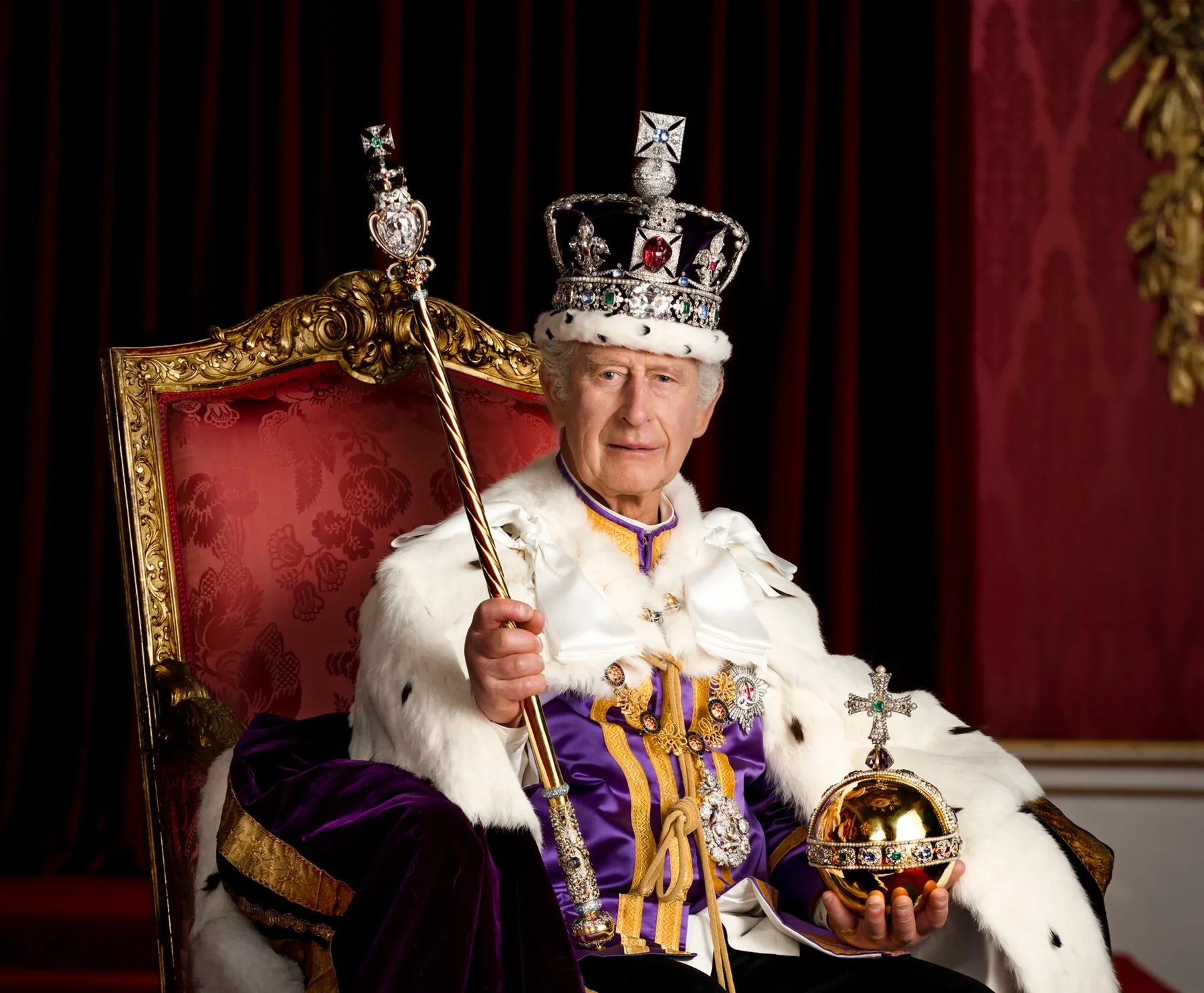
Our name nods to a crown; his is real. A factual look at the life and reign of the United Kingdom's monarch — independently written, with no affiliation to or endorsement by the Royal Household.
Kingswell borrows its name from an old idea of stewardship — building something durable enough to outlast its builder. It is a fitting week, then, to look past the metaphor to an actual monarchy still practicing that same discipline in public. This piece is independent editorial commentary. Kingswell Strategic Ventures has no affiliation with, and is not endorsed by, the British Royal Household.
Charles Philip Arthur George was born on November 14, 1948, at Buckingham Palace, the first child of then-Princess Elizabeth and Prince Philip, Duke of Edinburgh. He became heir apparent at age three when his mother acceded to the throne in 1952, and held the title Prince of Wales from 1958 until 2022 — longer than anyone before him in British history. He was educated at Cheam School, Gordonstoun in Scotland, a term at Geelong Grammar's Timbertop campus in Australia, and Trinity College, Cambridge, where he earned a degree in history.
The waiting years were not idle ones. In 1976 he founded The Prince's Trust to help young people build careers, and over the following decades became patron to more than 800 charities. He was an early and consistent voice on environmental sustainability and organic farming, often well ahead of mainstream opinion, and in 2020 he launched the Sustainable Markets Initiative to push private industry toward measurable climate commitments.
He acceded to the throne on September 8, 2022, following the death of Queen Elizabeth II, and was crowned King Charles III at Westminster Abbey on May 6, 2023. As monarch he has continued the advocacy of his prior decades from a more constrained constitutional position, while taking on the ceremonial and diplomatic duties of the office — including becoming the first British monarch to address both the French Senate and the German Bundestag.
The throne has not paused the rest of his life. In February 2024, Buckingham Palace disclosed that the King had been diagnosed with a form of cancer, unrelated to his prostate; he paused public-facing duties briefly for treatment and resumed them in April 2024, with a further short hospitalization in March 2025 for treatment side effects. He has continued a full diplomatic schedule since, including state visits to Australia, Samoa, France, Kenya, Canada, the United States, and Italy.
None of this is a business case study — Kingswell is not in the business of monarchy, and this is not an endorsement, sponsorship, or claim of any relationship with the Crown. But the throughline is one we recognize: a long institutional memory, an insistence on causes decades before they were fashionable, and a public willingness to keep working through personal setbacks. Stewardship, whether of a company or a country, tends to look like that.
The Constitutional Role, Briefly Explained
For readers outside the United Kingdom, the shape of the modern monarchy can be unfamiliar. The United Kingdom is a constitutional monarchy. The sovereign is head of state, but political power rests with Parliament and the elected government. By long convention, the monarch acts on the advice of ministers, remains politically neutral in public and does not vote or stand for office.
That arrangement still leaves meaningful duties. The monarch formally opens Parliament, grants Royal Assent to legislation passed by Parliament, appoints the Prime Minister and holds regular private audiences with the head of government. The sovereign also serves as head of state of a number of other Commonwealth realms and as Head of the Commonwealth, an association of nations. Much of the work is quiet: reading government papers, receiving ambassadors, hosting state visits and recognizing public service through the honours system.
The constraint is significant. A Prince of Wales could speak freely on causes he cared about. A king is expected to exercise restraint, and influence must largely flow through example, convening and the symbolic weight of the office rather than through public argument.
What Stewardship Looks Like When Power Is Limited
The interesting lesson for anyone who leads an organization is how stewardship works when direct authority is constrained. Several themes stand out from a long public life of this kind:
Patience measured in decades
Causes such as sustainability and organic farming were championed long before they became mainstream. Whatever one's view of any particular position, the pattern of sustained commitment to a long-horizon idea, through years of skepticism, is one that founders and boards can recognize.
Building institutions rather than projects
The decision to found a lasting organization for young people, rather than simply support individual initiatives, reflects a preference for structures that can outlive their founder. Durable institutions need governance, people and purpose that do not depend on any single person.
Convening rather than commanding
Efforts like the Sustainable Markets Initiative depend on bringing others together and persuading them to act. That is a form of leadership many executives underuse: shaping outcomes by assembling the right people around a shared problem.
Continuity through transition
The shift from heir to sovereign is, in its way, one of the most closely watched successions anywhere. Institutions that handle succession well tend to have prepared for it over many years, with roles, relationships and expectations understood well in advance.
Lessons for Leaders of Long-Lived Organizations
Know what your role allows. Every leader operates within limits set by boards, owners, regulators or custom. Effective stewards work skillfully within those limits rather than resenting them.
Invest in causes before they are fashionable. The advantages that compound longest are often built on commitments others considered premature.
Prepare successors deliberately. Long institutional memory is an asset only if it is transferred.
Keep showing up. Consistency of presence, through good seasons and difficult ones, is itself a form of leadership.
Let the institution be larger than the person. The aim of stewardship is to leave something that works well without you.
A Note on Perspective
Public figures attract strong opinions, and readers will hold a wide range of views on monarchy itself. This profile does not take a position on those debates. Its purpose is narrower: to observe how a long life in a single institution illustrates the patient, constrained and future-minded work that stewardship requires, and to consider what those patterns might mean for anyone entrusted with building something meant to last.
Work with Kingswell
Ready to bring clarity to your next decision?
We work with founders and operators on the strategic and operational questions that matter most. Start with a conversation.