Commercial real estate is often discussed as if it were one market. In practice it is a set of distinct businesses that happen to share a vocabulary. An owner of a neighborhood shopping center and an owner of a distribution warehouse both talk about leases, tenants and operating expenses, but the forces that determine their results are very different.
For operators and business owners, understanding these differences is useful whether you are leasing space, buying a building for your own company or simply trying to read the market more intelligently.
Office
Office property ranges from downtown towers to suburban parks and small professional buildings. Demand is tied to employment in office-using industries and to how companies choose to use space. Leases tend to run several years, and landlords often contribute significant money toward tenant improvements to win a lease.
Office buildings are commonly sorted into Class A, B and C based on age, location, finishes and amenities. Medical office is usually treated as its own subtype because its tenants, build-outs and lease terms differ meaningfully from general office.
Retail
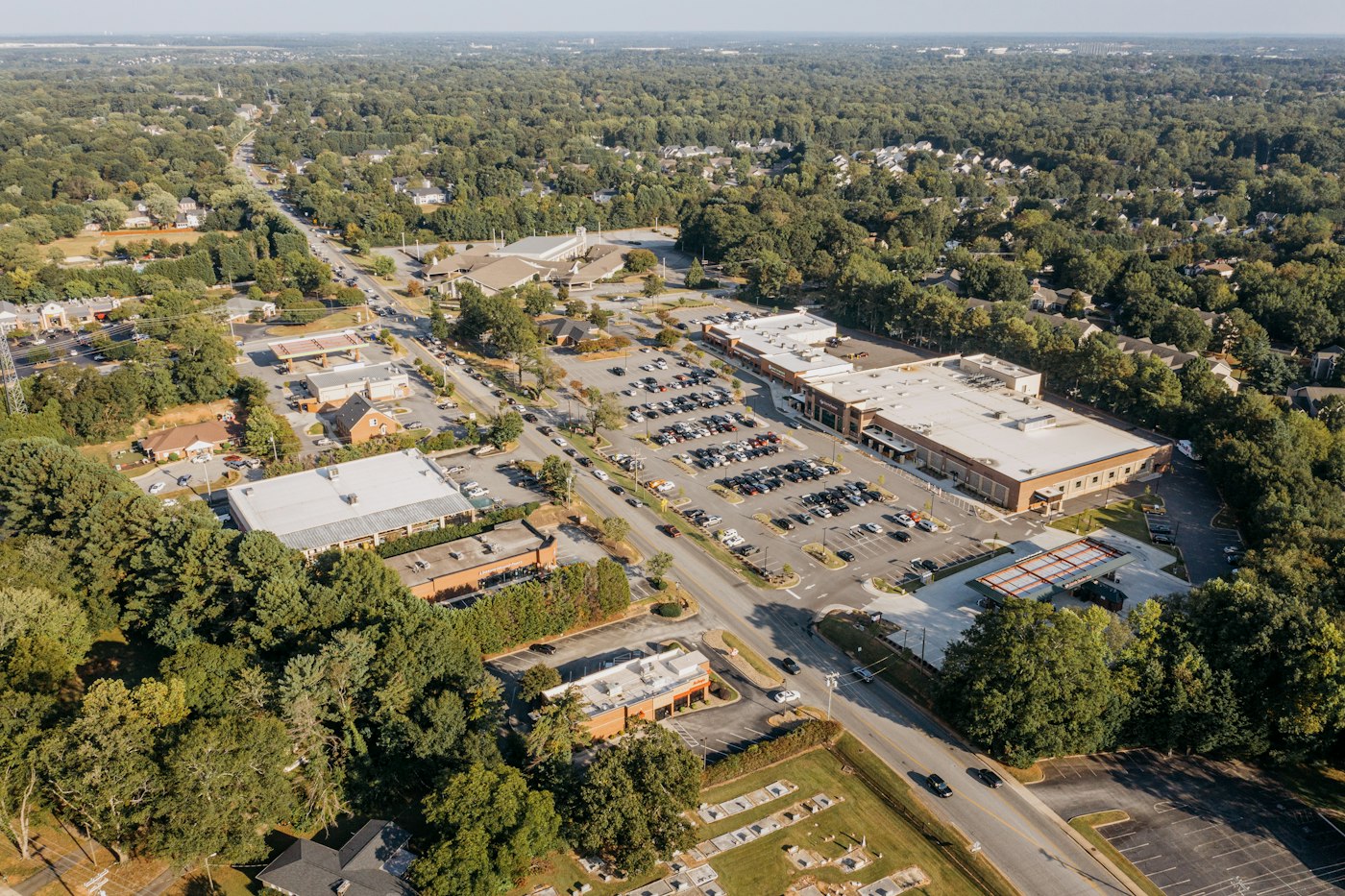
Retail covers everything from single-tenant pads to grocery-anchored centers, strip centers, lifestyle centers and enclosed malls. Location, visibility, access and co-tenancy matter enormously. A grocery store or a strong anchor can drive daily traffic that benefits the smaller tenants around it.
Retail leases frequently pass operating costs through to tenants and may include clauses unique to the category, such as co-tenancy provisions or percentage rent tied to a tenant’s sales.
Industrial
Industrial includes bulk distribution warehouses, smaller light-industrial buildings, flex space that mixes office and warehouse, manufacturing facilities and cold storage. Important physical features include clear height, loading docks, truck court depth, floor load capacity and power.
Industrial buildings are often simpler to operate than office or retail, and leases are frequently structured so that the tenant handles most operating costs.
Multifamily
Apartment buildings are usually counted as commercial real estate once they exceed a small number of units, because they are financed and valued as income-producing businesses. Leases are short, often a year, which means rents can adjust more quickly than in other classes, for better or worse. Operations are intensive: leasing, maintenance, turnover and resident service are constant.
Specialty and alternative classes
Beyond the four core types sits a long list of specialty property. Common examples include:
- Self-storage, which relies on many small, short-term rentals
- Senior housing, which blends real estate with care services
- Data centers, where power and connectivity are central
- Life science and laboratory space
- Land held for future development
Specialty classes often require operating expertise that goes well beyond property management. In several of them, the real estate and the operating business are difficult to separate, which affects how they are financed, valued and run.
The practical takeaway is that a property’s asset class shapes almost everything about it: who the tenants are, how long leases run, who pays which costs and what can go wrong. Before evaluating any building, it helps to ask first what kind of business that building actually is.
Comparing the Classes Side by Side
Seeing the major asset classes against the same set of questions makes their differences easier to grasp. The descriptions below are generalizations, and individual properties always vary, but they reflect patterns that hold across many markets.
How long do tenants typically commit?
- Multifamily: short leases, frequently around a year, so income responds quickly to market changes.
- Office and retail: multi-year leases, which create stability but also concentrated risk when a large lease ends.
- Industrial: often multi-year leases, sometimes with a single tenant occupying an entire building.
- Self-storage: month-to-month rentals spread across many customers.
How intensive is day-to-day operation?
- Industrial: generally lighter, especially when the tenant handles most building costs.
- Office: moderate to heavy, with shared systems, common areas and frequent tenant requests.
- Retail: varies widely, from simple single-tenant pads to centers that require active marketing and tenant mix management.
- Multifamily and senior housing: heavy, with constant leasing, maintenance and resident service.
What tends to drive demand?
- Office: employment in office-using sectors and workplace strategy.
- Retail: consumer spending, household growth nearby and shopping habits.
- Industrial: how goods are produced, stored and moved.
- Multifamily: household formation, local job growth and the relative cost of owning a home.
What This Means for a Business Owner
Many operators encounter commercial real estate as tenants first. Knowing which asset class you are dealing with helps you anticipate the landlord’s priorities and the likely shape of the lease.
- A medical or professional practice leasing office space should expect discussions about tenant improvements, base years and expense pass-throughs, and should plan for the specialized build-out medical uses require.
- A restaurant or shop leasing retail space should look closely at co-tenancy, signage rights, parking and how common area costs are shared.
- A contractor or distributor looking at industrial or flex space should focus on clear height, loading, power, yard space and zoning for the intended use.
- A business considering buying its own building should remember that the property may one day need to be leased or sold to someone else, so its appeal within its asset class still matters.
Common Misconceptions
- “Commercial real estate is up” or “down.” Broad statements rarely describe every class. One class can be strong while another struggles in the same city at the same time.
- “A building is a building.” Converting one class to another, such as office to residential, is often far more complex than it appears because of floor plates, plumbing, windows, zoning and codes.
- “Specialty property is just real estate.” In classes such as senior housing, hotels and data centers, the operating business can matter as much as the building, and expertise in running that business is essential.
Questions to Ask About Any Property
- Which asset class and subtype is this, and how is that segment performing locally?
- Who are the likely tenants, and what do they need from the building?
- How long are leases, and when do the largest ones expire?
- Who pays which operating costs under the typical lease structure for this class?
- What specialized knowledge is needed to operate it well?
Starting with these questions makes every later step, from touring to underwriting, more focused. For decisions involving an actual lease or purchase, working with a broker, attorney and financial advisors who know the specific asset class is the safest path.