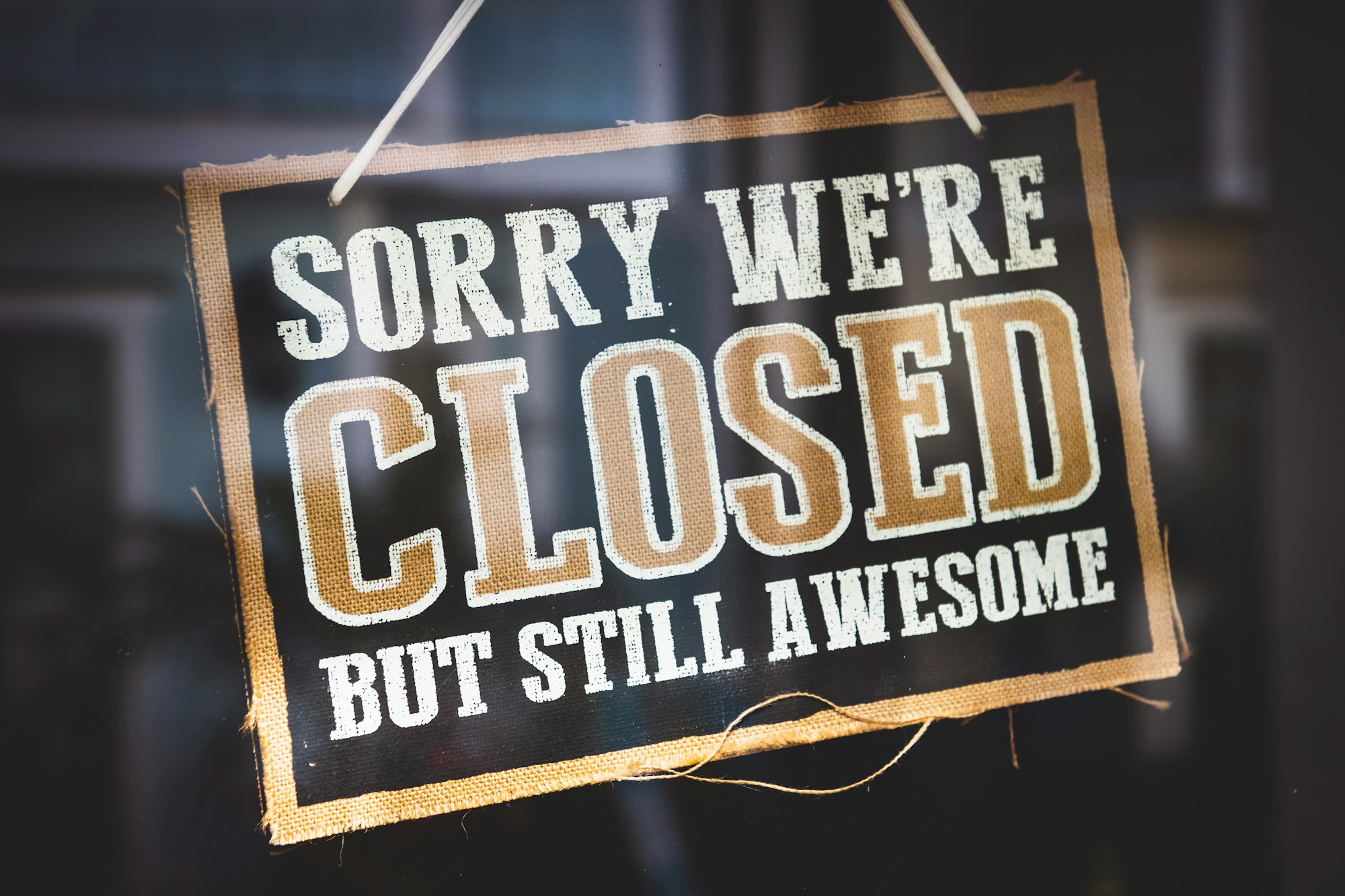
Temporary signs can accumulate across a shared property until visitors receive conflicting instructions. A closure notice, delivery arrow and old contact number may each have been useful when installed. A practical review checks whether they still describe the current arrangement and whether their placement supports the intended task.
Walk the routes used by visitors, occupants and approved service providers with the responsible property team. Record the purpose, owner and expiry of each temporary notice. Keep security-sensitive information within the appropriate operational record. Do not publish access details in a general inventory.
Compare signs with current reception, delivery and holiday arrangements. If a notice directs people to another entrance or contact, verify that route with its owner. A sign should not create a new access or safety instruction without the necessary review. Refer specialist requirements to the qualified people responsible for the property.
In a hypothetical shared building, an old delivery notice may point to a desk that will be unstaffed during a closure. The useful action is to confirm the actual receiving plan and update the message accordingly. Remove or archive expired notices through the property’s approved process so a new instruction does not compete with the old one beside it.
Put the review into practice
Check the message from the visitor’s position rather than reading it only at close range during the inspection. Can the person identify the relevant date, destination and next action? Keep important wording readable and avoid using color alone to distinguish different routes. If information also appears in an email or website notice, compare those versions. Assign a removal date when a temporary sign is approved, not after it has already become obsolete. The review should result in a coherent set of verified instructions and an owner for future changes. It is an operational communication check, not an invitation to redesign regulated signage or substitute an informal inspection for professional property and safety advice.
Questions to settle
- Record the purpose, owner and expiry of temporary notices.
- Verify the actual destination before posting a route change.
- Compare signs with reception, delivery and holiday arrangements.
- Leave specialist access and safety decisions with responsible qualified owners.
Quick check
How much did you catch? Tap a question to see the answer.
1. What should be recorded for a temporary property sign?
Answer: Record the purpose, owner and expiry of temporary notices.
2. What needs checking before a route-change sign is posted?
Answer: Verify the actual destination before posting a route change.
3. Which arrangements should agree with the signs?
Answer: Compare signs with reception, delivery and holiday arrangements.
Running the Walkthrough Step by Step
A sign review goes faster and catches more when it follows a planned route and uses a consistent record. The approach below can be adapted to the size of the property and the number of occupants.
- Agree on the routes. Before walking, list the journeys that matter: the main visitor entrance, the delivery approach, the route used by approved service providers and any alternative entrance used during reduced hours.
- Walk each route as the user would. Start where a visitor or driver would first arrive, not at the nearest convenient sign. Note what they would see and in what order.
- Record each temporary notice. For every sign, capture its location, its message, who put it up, when it was approved and when it was meant to come down.
- Test the instruction. If a sign says to call a number, go to a desk or use another entrance, check with the owner of that route that the instruction is still correct for the holiday period.
- Flag conflicts. Note where two signs give different directions or where a temporary notice contradicts a permanent one.
- Agree actions. For each sign, decide whether to keep, update, replace or remove it, and name who will do so through the property’s approved process.
What Makes a Temporary Sign Easy to Follow
Good temporary signage tends to share a few qualities. They are worth checking for during the walkthrough, alongside whether the information is current.
- One message per sign. A notice that combines a closure, a new contact and a delivery instruction asks too much of a person glancing at it.
- The date is visible. If the arrangement applies only during certain days, those days should be clear without close reading.
- The next action is obvious. The reader should know what to do: go left, ring the bell, use the other entrance or wait.
- Wording does not rely on colour alone. Distinguishing routes by colour can help, but the words should carry the meaning on their own.
- It is placed at the decision point. A sign is most useful where the person must choose a direction, not after they have already gone the wrong way.
Keeping Signs, Email and Web Notices Consistent
Holiday arrangements are often communicated in several places at once: on the door, in an occupant email, on a website and in a voicemail message. Visitors may see any of them first. When the review is complete, compare all versions against the verified arrangement. Small differences, such as a different reopening date or a contact who has changed, cause more confusion than having no notice at all.
It can help to treat one record as the source and update the others from it. When the arrangement changes, every version is updated together and the person responsible confirms that the old versions have been replaced.
Questions Property Teams Ask
Who decides which signs come down?
The person or team responsible for property communications under the building’s arrangements. Occupants can point out outdated notices, but removal should follow the agreed process so that a necessary instruction is not taken down by mistake.
Should every temporary sign have an expiry date?
It is good practice. Assigning a removal date when the sign is approved means someone will check it, rather than relying on a future walkthrough to notice that it has become obsolete.
What about signs required by regulation?
Those are outside the scope of an informal communication review. Any question about required safety or regulated signage should go to the qualified people responsible for the property, and the review should never remove or alter such signage on its own authority.
How often should the review happen?
At least before predictable changes in arrangements, such as holidays and seasonal hours, and after any significant change in occupancy or access. A short check after the holiday period, to remove notices that no longer apply, completes the cycle.
Chronicles, ventures and principles from Kingswell Strategic Ventures on iPhone, iPad and Apple Watch.