At 11 a.m. today, much of Britain and the Commonwealth will fall silent for two minutes. Armistice Day marks the moment in 1918 when the guns stopped on the Western Front, at the eleventh hour of the eleventh day of the eleventh month. This year it follows a Remembrance weekend in which King Charles III again led the nation’s tribute at the Cenotaph in Whitehall.
The ceremonies are among the most tightly choreographed in British public life. They are also a useful study in a kind of leadership that rarely makes headlines: showing up, keeping a promise to the past, and letting the occasion matter more than the person leading it.
What happened at the Cenotaph
On Sunday, November 8, the King observed the two-minute silence and laid the first wreath at the Cenotaph, according to HELLO!. He wore field marshal’s uniform with a greatcoat, cap and sword. His Sovereign’s Wreath carried 41 paper poppy petals mounted on black leaves, and HELLO! reported that his handwritten card read, in part, “In everlasting remembrance.”
Prince William laid a wreath in the uniform of a lieutenant colonel of the Household Cavalry. Princess Anne and the Duke of Edinburgh also laid wreaths. Queen Camilla watched from the balcony of the Foreign, Commonwealth and Development Office building, and an equerry laid a wreath on her behalf. Catherine, Princess of Wales watched from the same balcony, joined by other members of the family.
Political leaders took part as well. Prime Minister Andy Burnham laid his first Remembrance Sunday wreath since taking office, alongside Conservative leader Kemi Badenoch and other party leaders, according to HELLO!. Archbishop Dame Sarah Mullally led a prayer after the wreath-laying, followed by the national anthem.
About 10,000 veterans joined the Royal British Legion’s march-past, representing some 300 armed forces and civilian organisations. The night before, the King led senior royals at the Festival of Remembrance at the Royal Albert Hall.
Prince Harry’s separate tribute
Prince Harry was not at the Cenotaph. HELLO! and other outlets reported that he attended a separate Remembrance Sunday service in Brackley, Northamptonshire, wearing his military medals and a poppy, and that he spent time greeting people in the town afterward. Harry served two tours in Afghanistan, and his connection to veterans’ causes, including the Invictus Games he founded, is long-standing. Coverage of his weekend was largely about the contrast in settings rather than any public statement from either side.
The history behind the two minutes
The Armistice that ended the fighting of the First World War was signed in a railway carriage at Compiègne, in northern France, in the early hours of November 11, 1918, and took effect at 11 a.m. A year later, King George V asked the nation to pause in silence at that hour, and the two-minute silence has been observed ever since.
The Cenotaph itself, designed by Sir Edwin Lutyens, began as a temporary structure for the 1919 victory parade. Public feeling was so strong that it was rebuilt in Portland stone and unveiled in 1920. Its name comes from the Greek for “empty tomb,” and it carries no religious symbols, so that it can honor everyone who served.
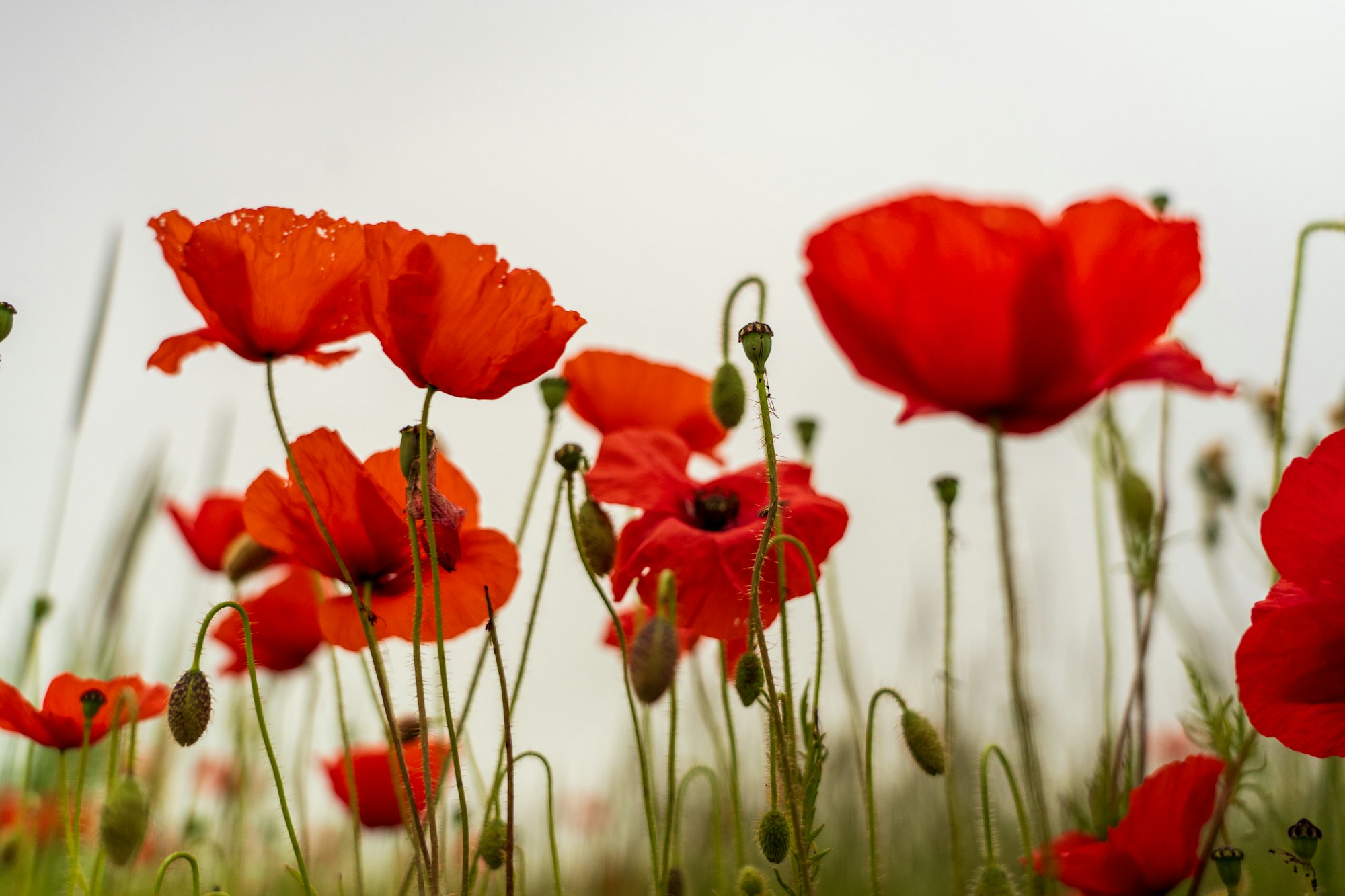
The red poppy traces back to the battlefields of Flanders and to John McCrae’s 1915 poem “In Flanders Fields.” The Royal British Legion held its first Poppy Appeal in 1921, and the poppy has been the symbol of remembrance in Britain ever since. Remembrance Sunday, the second Sunday in November, now carries the main national ceremony, while Armistice Day keeps the original hour.
Why the rituals still matter
Remembrance is one of the few national occasions in which the monarch’s role is almost entirely symbolic and almost universally accepted. The King does not speak at the Cenotaph. He lays a wreath, salutes and stands in silence. The power of the moment comes from repetition: the same words, the same order, the same two minutes, year after year.
That continuity is the point. Every generation of veterans who march past the Cenotaph is joining a line that stretches back more than a century. The ceremony makes a promise to them: that what they did will be remembered in the same way, by the same institutions, for as long as those institutions last.
The Kingswell Take
Kingswell Strategic Ventures watches the monarchy for what it teaches about institutions that last. Three lessons stand out from this year’s Remembrance weekend.
- Consistency builds trust. The ceremony works because it does not change with fashion. Organizations that keep their core commitments steady, even when leadership changes, earn trust that marketing cannot buy.
- Leaders serve the occasion. The King’s role at the Cenotaph is to make the moment about the fallen, not about himself. The best leaders know when to step forward and when to step back.
- Families and institutions can disagree and still honor the same values. Harry and the rest of the royal family marked the day in different places. The shared act of remembrance outlasted the differences.
For business owners and executives, Armistice Day is also a reminder of the veterans on their own teams. Many bring discipline, calm under pressure and a deep sense of duty. Recognizing that service, in the U.S. on Veterans Day and in Britain on Armistice Day, costs little and means a great deal.
What it means for you
- The two-minute silence takes place at 11 a.m. local time on November 11 in the U.K. and many Commonwealth countries.
- In the United States, November 11 is Veterans Day, honoring everyone who has served.
- If your company employs veterans, a simple acknowledgment today is worth more than a campaign later.
- Institutions that repeat meaningful rituals reliably build lasting loyalty.
Sources: HELLO! via Yahoo News; HELLO!; Newscord news roundup
Quick check
How much did you catch? Tap a question to see the answer.
1. How many paper poppy petals were on the King’s wreath?
Answer: 41, mounted on black leaves.
2. Roughly how many veterans joined the march-past?
Answer: About 10,000, representing some 300 organisations.
3. Where did Prince Harry mark Remembrance Sunday?
Answer: At a separate service in Brackley, Northamptonshire.