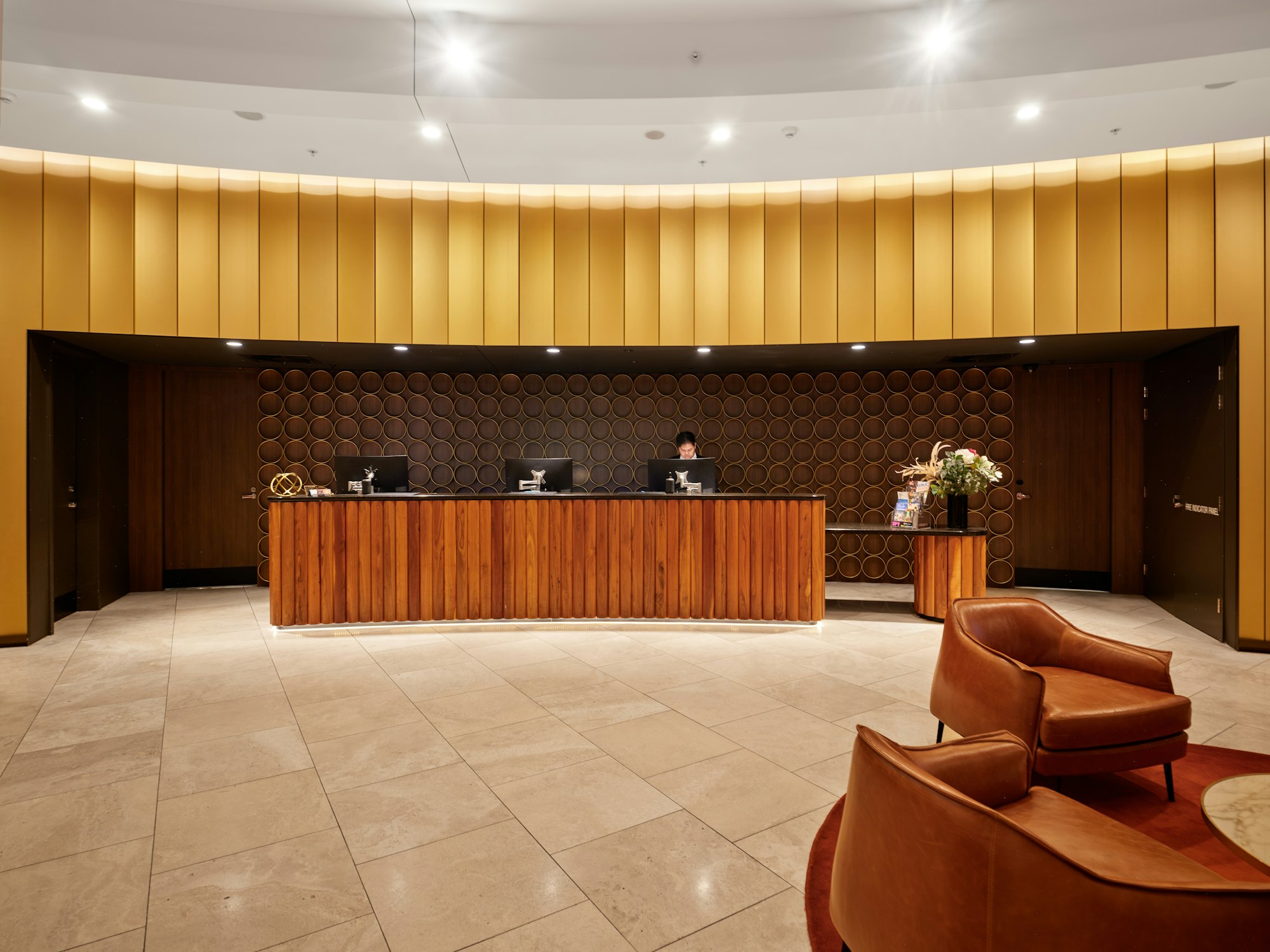
A front-desk handover is not simply a summary of what happened during the shift. Its most useful information concerns what the next team still needs to do. An unresolved request can be missed when it is buried in a general narrative about a busy day.
Use the property’s approved system to identify the request, its status and the next action. Keep personal guest information limited to what the receiving team needs. Distinguish a promise already made from a suggestion that still requires approval. The next person should not have to infer whether a guest is expecting a confirmed arrangement.
Name the receiving owner or queue and the point at which the guest will be updated. If another department is supplying the answer, record that dependency without treating it as a completed handoff. The front desk may still own the communication even while the underlying task sits elsewhere.
For a hypothetical accommodation team, a room-related request might await a responsible specialist’s assessment. The handover should identify what can be said accurately now and who will provide the next information. Avoid adding a confident completion time that the specialist has not confirmed. Good hospitality depends on clear expectations as well as a friendly tone.
Put the review into practice
Review the handover at the start of the receiving shift, while clarification is still possible through the normal process. Read back the unresolved actions rather than every historical detail. If a request has been waiting through several shifts, escalate it through the property’s established route instead of repeatedly copying the same note. Keep the final resolution with the original request so future staff can understand the outcome. Do not turn a broadly visible shift summary into a store of private guest stories. The goal is continuity of service: the guest should not need to restart the conversation because the staff member changed, and the receiving team should know exactly which action it has accepted.
Questions to settle
- Lead with unresolved actions rather than a general account of the shift.
- Separate confirmed promises from proposals awaiting approval.
- Identify who owns the guest update and the underlying work.
- Escalate repeatedly carried requests through the established property process.
Quick check
How much did you catch? Tap a question to see the answer.
1. What’s the most useful part of a front-desk handover?
Answer: What the next team still needs to do.
2. What distinction must the handover make clear?
Answer: A promise already made versus a suggestion that still needs approval.
3. Should the handover include a confident completion time?
Answer: Not unless the responsible specialist has confirmed it.
Structuring a Handover Around Open Actions
A front-desk handover is most useful when its structure puts unfinished work first. Many teams naturally narrate the shift chronologically, which buries the items that matter under a story of what already happened. Reordering the handover around open actions makes the next team’s priorities obvious.
- Open guest requests, each with its status, the next action and who owns it.
- Promises made during the shift, including callbacks, arrangements confirmed and information the guest is expecting.
- Dependencies on other departments, noting what has been requested, from whom and when an answer is expected.
- Arrivals and departures needing attention, limited to the operational detail the next team needs.
- Anything escalated, with the route used and the person now responsible.
- General notes, kept brief and placed last.
Language That Prevents Misunderstanding
Small differences in wording can change what the next shift believes a guest has been told. Agreeing on a few plain phrases helps everyone read the handover the same way.
- “Confirmed” means the guest has been told an arrangement is in place and the team must deliver it.
- “Requested, awaiting approval” means the guest has asked and has been told an answer is coming, but nothing has been promised.
- “Suggested” means a staff member mentioned an option but the guest has not asked for it to be arranged.
- “With [department]” means another team holds the underlying task, while the front desk still owns the guest update unless the handover says otherwise.
When the next shift reads “confirmed,” they know a commitment exists. When they read “requested,” they know their task is to chase the answer and update the guest accurately.
Handover Habits That Cause Problems
- Copying the previous note forward. An unresolved request appears on handover after handover with no new action. Repetition is a signal to escalate, not to copy again.
- Recording private details broadly. A shift summary visible to many staff includes personal information that only one or two people need. Keep that detail in the property’s approved guest system.
- Offering times nobody confirmed. A staff member reassures a guest that something will be ready by a certain hour without checking with the team responsible.
- Skipping the read-back. The handover is left in a log but never discussed, so questions that could have been answered by the outgoing shift are left hanging.
- Closing without recording the outcome. A request is resolved, but the resolution is not added to the record, so a later shift cannot answer the guest’s follow-up.
Questions Hospitality Teams Ask
How long should a handover take?
Long enough to read back every open action and answer questions, and no longer. A structured note makes this quick because general information can be skimmed while open items receive attention.
Who owns a request when the guest’s contact person goes off shift?
The handover should transfer that ownership explicitly to a named person or queue on the next shift. If nobody accepts it, the outgoing staff member should raise it before leaving.
What if a request has been waiting for several shifts?
Use the property’s established escalation route, record that it has been escalated and tell the guest what can be said accurately. Repeated waiting without escalation is how small requests become complaints.
Should the handover format be the same on every shift?
Consistency helps. When every shift uses the same order and the same status words, staff learn to find open actions quickly and to notice when something is missing. Small adjustments for quieter overnight periods are reasonable, but the core sections should not change from one handover to the next.
Chronicles, ventures and principles from Kingswell Strategic Ventures on iPhone, iPad and Apple Watch.